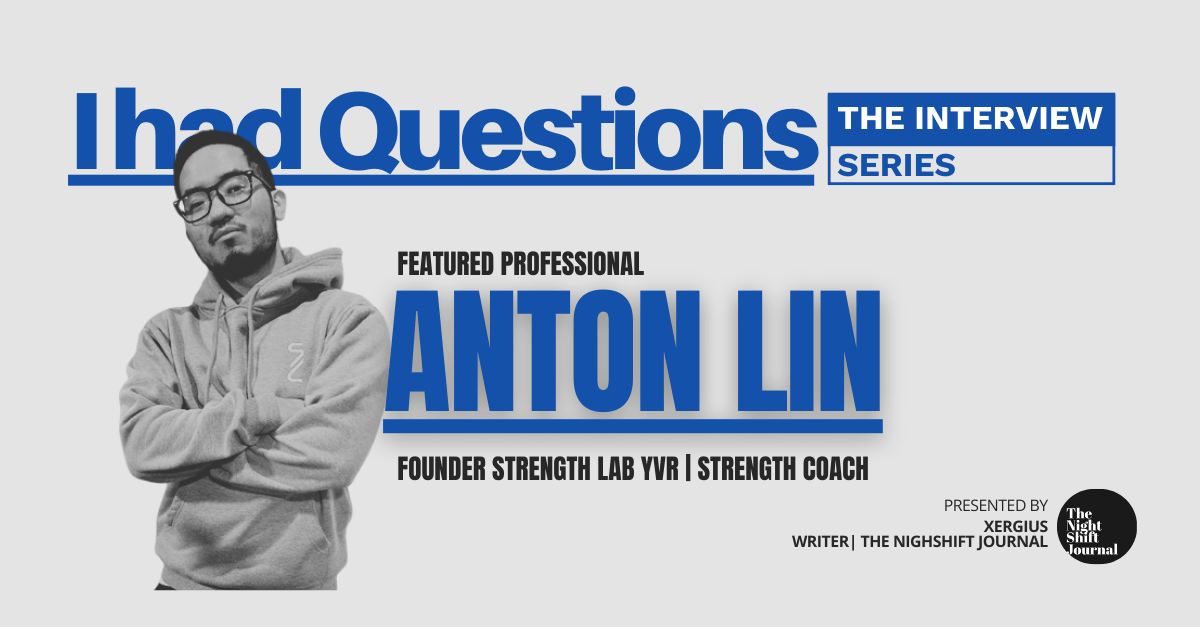
Anton Lin | Founder | Strength Coach
Competition sits at the core of every athlete. That drive, the hunger to push, refine, and rise, is what fuels so many toward elite performance. But behind the hours of practice, the repetition, and the grind are the programs and coaches that athletes trust with their growth.
Anton’s story goes beyond competition. It’s about building, building himself, building others, and building a community that believes in him as much as he believes in them. The people around him are his motivation, his purpose, and ultimately, his joy.
He accepted early on that he didn’t have the height or natural gifts to excel in a sport that rewards stature. Instead of blaming circumstances, he embraced reality. And in that acceptance, he found his calling: to develop athletes, everyday people, and anyone who sought his guidance.
Through his coaching, countless athletes have stepped onto podiums, earned medals, and discovered their own strength and confidence. This is Anton’s journey, and it’s only the beginning. With the opening of his own training facility, he’s continuing to shape a stronger, more connected community.
For now, let’s look back at where Anton started, and where he’s determined to go next.
What first drew you to powerlifting, and when did you realize that coaching, not competing, was the path you wanted to pursue?
“I started lifting in 2012 because I needed size and strength for basketball. I “lacked height and physicality as a player,” so the weight room became the only way to keep up.
By 2014 I was getting into compound lifts, but the moment that truly hooked me came at the Fitness Expo in 2015. I watched someone squat 800 pounds in person, and that “opened my eyes and introduced me to the sport.”
I competed for the first time in 2019, but coaching was always the dream. After graduating in 2018, I became a personal trainer, and by 2020 I was coaching actual powerlifters.
Early on, I thought I had to choose between coaching and competing “if I have lifters competing at the same time as me, it doesn’t make sense to coach and compete.” Later I realized that mindset was flawed.
Competing is also “active advertisement for the business,” so I returned to the platform in late 2024.”
Who inspired you to coach?
“There wasn’t one idol. I’ve had many mentors and coaches who shaped me, but no single person I’d call the inspiration. In terms of programming, the biggest influence is Marcellus Williams “The Swole Fessor.” A lot of my training philosophy comes from his insights and expertise.”
How would you describe your coaching identity?
“I’m a coach who cares, not just about your strength, totals, or techniques, but also your well-being. “Longevity and health” matter to me as much as strength. I’m confident I can get lifters strong, but I want them to stay healthy and have a balanced mindset while doing it.”
What’s something you do differently from most coaches out there?
“I think what separates me is how much I care about my lifters and their foundational habits. I dig into them harder than most. When someone isn’t progressing, I look into their routines and recovery before touching the program. The key to progress isn’t always more work they just need to do more of what they’re already doing better.
It’s doing your accessories with intent, drinking enough water, getting enough calories, rest, managing stress, and taking care of themselves outside of the training room.”
How do you balance science, intuition, and experience when making decisions for your athletes?
“I keep things simple and make sure to involve the athlete in the process. I explain why we’re doing what we’re doing; why it’s 10 reps instead of 12, why a phase looks a certain way. When lifters understand the purpose, they buy in more and work harder. Experience tells me when to push, when to pull back, and how to adjust based on a client’s personality.”
What’s a common mistake lifters make, that’s easy to fix but rarely addressed?
“Ignoring the basics. People chase fancy variations they see online instead of asking:
Am I sleeping enough?
Am I drinking water?
Am I eating enough protein?
Am I focused during training?
Most people don’t need a new exercise; they need discipline.”
When you take on a new client, what’s the first thing you ask them? And what’s the first thing you tell them?
“I have a full questionnaire that gives me the data I need when onboarding a new client. It’s something I have on my bio like every other coach, but the first thing I tell them is that communication matters. If communication falls off, the coaching relationship falls apart. I expect training videos, summaries, and honesty about how things feel.
The questions I ask are pretty standard, enough to build a suitable program, but what I truly care about is effort in communication and making sure expectations match. If we don’t set those rules early, clients tend to get lazy, and when communication drops, the relationship drops with it.”
Did you ever say no to a potential client? Why? And why not?
“I’ve never straight-up denied someone, but I’ve delayed onboarding when my roster was full. The only person I’ve dropped was someone who used PEDs without telling me. Most of my lifters compete in drug-tested competitions; honesty in this sport is non-negotiable for me, and I want to keep that integrity.”
In your opinion, what separates a great lifter from a championship powerlifter?
“Talent plays a role, but the biggest separator is the ability to do something boring, day in and day out, for years. Powerlifting has little monetary reward. The best lifters are process‑oriented and can detach from the outcome. Champion powerlifters are great lifters who didn’t stop doing the boring stuff.”
What’s a coaching mistake you made early on that changed how you operate now?
“Not setting expectations clearly. Early in my career, communication wasn’t structured, and relationships quickly fell off.
Now I set the rules and expectations early and I try to communicate clearly; it makes everything smoother for both sides.”
How do you approach programming for lifters with very different body types or movement patterns?
“Movement patterns, leverages, and range of motion matter more than most people realize. A taller lifter has to move the bar through a greater ROM, which means they usually can’t tolerate the same squat frequency as someone shorter and more compact. I like squatting three times a week, but a 6’4” lifter may only handle two.
Technical changes also take time to settle. It typically takes 3–4 weeks of consistent training before we know whether a new cue, stance, or position is actually effective. That’s why we test, adjust, and refine until we land on the stance or variation that feels strong, efficient, and sustainable.
My job is to put in that time, to experiment, observe, and tailor the process so every lifter gets what works best for their body.”
What’s your philosophy on accessory work?
“Accessories should be done with intent. But they need to match the lifter’s needs, not whatever trend is circulating online.
You can have the best technique in the world, but if you don’t have the necessary help from your muscles, you won’t lift big weights. Powerlifters need to maximize body composition within their weight class. The key is balancing the main lifts with accessories, so fatigue is manageable, and progress stays consistent.”
What’s your philosophy on attempt selection during competition; aggressive or conservative?
“I lean toward smart, data‑driven attempts. Not overly aggressive, not overly conservative, just what sets the lifter up for the best total.
My attempt selection surprises people because my openers look light, and the jumps between attempts can be big. In powerlifting you get three attempts per lift, nine total, and the goal is to finish strong.
Opening lighter saves energy, so you can actually hit a heavy third attempt.
A lot of lifters miss their thirds because they open too heavy and run out of gas. People think my attempts are conservative because of the opener, but if you look at the thirds I call, they’re right on the money. My lifters rarely have anything left after their third attempts; that’s how I know the numbers were picked correctly.”
What’s the hardest part of coaching that people outside the sport don’t see?
“The emotional and mental load. Coaching isn’t just writing programs, its managing personalities, expectations, communication, and sometimes people’s stress outside the gym.
Working with different personalities without losing my own coaching style is one of the biggest challenges. It’s a people‑focused job, and from time to time it can be draining. It took me a while to find better work‑life balance.”
What kind of culture do you try to build in your gym or team?
“A culture of care, honesty, and long‑term thinking. Powerlifting should be part of your life, not your whole personality. I admire lifters who can blend the sport into their lifestyle and stay in it for the long run.
Powerlifting gyms are niche communities. Compared to commercial gyms, there’s a stronger sense of connection; everyone knows everyone. My gym thrives on that shared interest. People help each other, support each other, and commit to lifting with good standards, longevity, and good mental health.”
What trends in programming or techniques do you think will define the next decade?
Daily Undulating Periodization (DUP).
“Over the last five years, powerlifting programming has leaned heavily on DUP, a framework that varies intensity and volume session by session. You train multiple adaptations within the same week: strength, power, and hypertrophy.
For example, one session might be heavy squats for doubles, and another might be leg press for sets of 12. Each session has a different goal. Even within a week, you might have a primary squat day focused on heavy singles or doubles, and a secondary squat day using pause squats for reps to build skill and control.”
When you think about your legacy as a coach, what do you hope people will say?
“That I cared. That I helped them get strong while staying healthy. That I helped make the sport sustainable for them.
I want people to see me as a coach who genuinely cares, regardless of their strength level. I want every lifter to feel taken care of. As a gym owner, I want people to feel welcome, even if the gym is far for them, the community we’ve built is what makes it worth it.”
What piece of advice would you give to your younger self?
“Talent isn’t everything; hard work is more important. I was always the smallest kid in class. I loved basketball, but I wasn’t tall or gifted. I learned early that hard work matters more than talent. I’m realistic, I knew I’d never make the NBA, but I still loved the game, that’s why I worked relentlessly to play it.”
Do you think Little Anton would be proud when he sees you now?
“Yeah, I think so. I built a career doing something I love, and I stayed true to who I am.
I’ve always wanted to prove myself through hard work. If young Anton saw what I’m doing at 31, he probably wouldn’t believe it, and he’d be proud.”
Anton’s story isn’t defined by numbers on a bar or medals on a wall—it’s defined by the people he’s lifted along the way. As he steps into this next chapter as a gym owner and community leader, the mission stays the same: build with intention, coach with care, and help lifters become the strongest versions of themselves. His journey is still unfolding, and the community he’s shaping is only getting started.
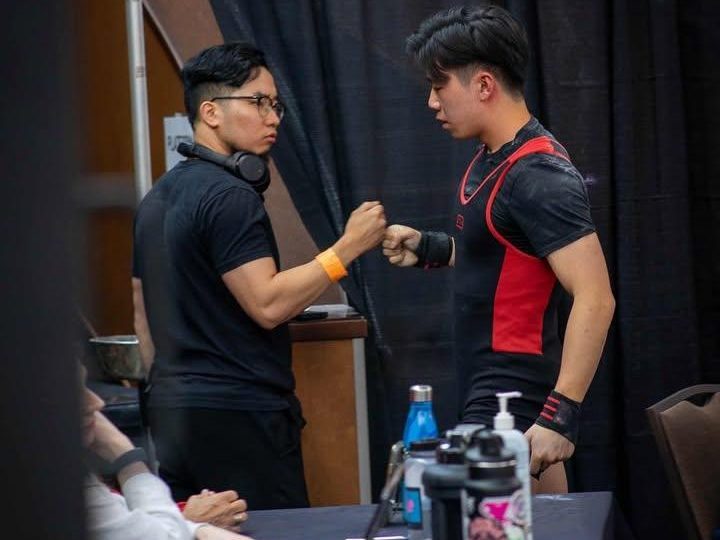
Before I ended my conversation with Anton, I asked him some more questions to learn more about his thoughts and opinions.
What’s your opinion on cold plunges
They’re fine if you enjoy them, but they’re not magic. If you think it helps, then by all means do it.
What about warmups?
Essential, but they don’t need to be complicated. Just enough to get you moving well.
Stretching?
Useful when applied correctly, but not a replacement for good training and recovery.
Your favorite quote?
“Hard work beats talent when talent doesn’t work hard.” It resonates because I was never given physical gifts; I had to work harder to compete. And my hard work never failed me.
One small habit that made the biggest difference
Having structure changed everything. I used to just go with the flow, but powerlifting and a mindset shift forced me into a structured daily routine, making sure I am doing all my non-negotiables daily like:
Training three or four days a week
Eating enough calories and drinking at least 2L of water
A book, coach, or resource that changed how you think about training
I’m not a big reader of books or any kind of literature, but I use an online platform called Powerlifting Now. It’s run by several coaches and has been incredibly helpful for my development both as a coach and as a lifter.
Why should people try powerlifting?
Honestly, just be active; I don’t care if you run marathons or play basketball, as long as you’re moving, but people should try powerlifting because it teaches discipline and patience. And it’s empowering to see yourself get stronger.
Are you happy?
Last year I had a lot of ups and downs, for sure, and I even started therapy. But this year I can say that I’m in a better place.
If you ask me today, I’d say yes, because I’m doing what I love. I help people get strong, and I know I’m building something meaningful, that’s what makes me happy.
 XERGIUS.COM