
Sammy Solitario| Coach | Athlete | Entrepreneur
Brazilian Jiu-jitsu is still young compared to the ancient lineages of boxing, wrestling, or kung fu, yet its rise has been explosive. Part of that comes from cultural visibility through people like Joe Rogan, Jocko Willink, and Keanu Reeves, but the deeper reason is simpler. BJJ speaks to something people today are hungry for. It is strategy over size, intention over instinct, and problem solving under pressure. Practitioners call it human chess because the art rewards those who can think, adapt, and stay several steps ahead. On the mats, strength matters far less than technique, timing, and the willingness to learn.
For many, the mats have also become a refuge. A place where stress dissolves, ego softens, and everyone, regardless of belt, background, or experience, becomes both student and teacher. You grow together. You struggle together. You become better together.
Sammy’s path in Jiu-jitsu is a story of becoming. What started as a search for structure after high level basketball evolved into a lifelong practice of discipline, humility, and self mastery. Over the years, he transformed from student to competitor, from competitor to coach, and eventually from coach to entrepreneur as the founder and designer behind Sprezzatura BJJ Apparel. Through it all, he never lost sight of where he began and the community that shaped him.
Today, Sammy continues to train, teach, and build while establishing a platform that ties Jiu-jitsu to something deeper: men’s mental health, vulnerability, and the courage to speak up. His journey is equal parts craft and calling.
In this conversation, I sit down with Sammy to explore the moments, mentors, challenges, and choices that shaped his path.
How did your Jiu-jitsu journey begin, and what drew you to it initially?
“I started training right after high school. I had played high level basketball until Grade 12, but my grades were not good enough to get into the universities I wanted. I still needed a physical outlet, so I searched for an MMA gym near me and ended up finding a Jiu-jitsu gym in Abbotsford called Genesis. From the first class, I fell in love with it. It gave me the structure and challenge I missed after basketball.”
“I trained there from white belt until I earned my blue belt. Then one of the instructors, Shawn, opened Pacific Top Team in Abbotsford. I received my purple belt under Shawn.”
How has your relationship with the sport evolved over time?
“In the beginning, everything was about competing and learning as much as I could. Up until purple belt, I saw myself as a competitor and student first. But once I reached brown belt, things shifted. I started teaching more, and I realized I loved coaching just as much as training. My passion moved from trying to be the best competitor to helping other people grow. That became my focus for years.”
When and where did that passion come from?
“Honestly, I have been teaching since white belt. I was lucky with who I trained with. Jason my coach, one of the best Gi competitors out of BC, took me under his wing. As a white belt, I traveled with him to compete in California, Madrid, Paris, and Berlin. I got to see high level competition up close. Whenever he taught somewhere, I would go with him and be his “uke”. That shaped me early.”
Were there times when rolling was not as fun anymore?
“Definitely. Jiu-jitsu is a long journey. It took me eight years to get my black belt, and there were stretches where I felt like I was losing my love for it. You hit plateaus, you get beat by people you think you should be beating, and it gets in your head. But if you really love the sport, the passion always comes back.”
What is harder, the physical or the mental?
“The mental side, for sure. Physically, I could train four to five hours a day. But mentally, people who do not train do not understand that side of things. When you get submitted or choked multiple times in an hour, you take that home with you. It should not matter, but it does. You have to leave your ego at home. There is always someone who can beat you up. You cannot walk in thinking you are king of the hill.”
What lessons did earning each of your belts teach you?
“Earning my blue belt showed me I was truly moving forward. I had competed a lot as a white belt and even won a few IBJJF tournaments, so getting promoted felt like confirmation that the work was paying off. Back then I only competed in the Gi. I had never stepped into NoGi competition, but now that I am a black belt, I am finally doing it.”
“Purple belt was where everything clicked. It’s when I really found my style. I fell in love with outside passing, leg drags, and berimbolos, even though I am a bigger guy. I studied the Mendes brothers obsessively and built my game around that movement.”
“Brown belt was about refinement. Tightening every detail. Sharpening what I already had. I wish I had competed more, but I was dealing with mental blocks. I was afraid to lose, afraid people would think less of me. I do not carry that mindset anymore.”
“Looking back from white to black, the biggest lesson is simple: trust the process. Keep showing up. Focus on getting one percent better each day.”
How do you balance being both a practitioner and an instructor?
“You need real experience as a practitioner before you can teach well. And you should only teach what you actually do. If I am teaching berimbolos to a room of students, I better be hitting berimbolos in my own rolls. A lot of people teach things they do not use, and I do not believe in that. I try to practice what I preach.”
What have you learned from teaching others?
“Being a good teacher is harder than people think. It is not just showing a move. You have to explain things in a way that makes sense to everyone, and you have to adapt to each person. Teaching taught me patience, communication, and how to care about people beyond the technique. That is the difference between an instructor and a coach.”
“An instructor teaches techniques. A coach cares about the person. A coach goes to competitions with you, helps you troubleshoot, and supports you even outside the academy. I am definitely a coach.”
What inspired you to start Sprezzatura? What is the story behind it?
“Jiu-jitsu is my passion, and I wanted to find a way to be involved in it full time. Owning a gym was not an option, so I looked at gear. I noticed that Nogi designs were boring and repetitive. With Nogi, you can be creative because the canvas is wide open. I design everything myself, often inspired by retro soccer kits. I wanted to bring something fresh to the sport.”
Why connect it directly to men’s mental health?
“Because it is something I deal with personally almost every day. And I know a lot of guys in Jiu-jitsu deal with it silently. When I shared my story, people I barely knew reached out to me. Men struggle to speak up because we are taught that showing emotion is not manly. I want to help change that. If I can share my story, maybe someone else will feel safe enough to share theirs.”
“Mental health is something I have dealt with personally, even recently, and honestly it is something I deal with almost every day. A lot of guys in Jiu-jitsu struggle, and many of them struggle in silence. That is something I want to help change.”
“It is hard to speak up about it. You have to be brave to share your story because you worry people might think you are looking for sympathy or that they might not believe you. But it is real. It is something so many guys deal with day to day. After I posted about my own experience, a lot of people reached out, even guys I was not close with, guys I only knew through the Jiu-jitsu community. They shared their stories with me.”
“They told me they understood how hard it is to talk about what you are going through because you do not want the spotlight on you. When you are already struggling, the last thing you want is to feel like everyone is watching you. But hearing from them made me realize how important it is to speak up. When you share your story, it gives other people permission to open up and share theirs. It makes them feel less alone.”
Which charities have you chosen, and how do you balance profit with sustainability?
“We donate 10% of our profits to the Canadian Men’s Health Foundation, supporting men’s health initiatives with quarterly contributions.”
“I just want there to be a meaning behind what I do. If I can create a good platform, I want to use that platform for something good, something that will help others. That is why I tied it to men’s mental health. You are supporting a bigger cause than just a local business that makes Jiu-jitsu gear. Maybe that Nogi kit you bought will help someone on their mental health journey.”
What has been the most challenging part of starting Sprezzatura?
“Sampling, without question. Getting the fit, material, and details right took months. The first sample they sent me was basically a baggy T-shirt because they did not understand it was for Jiu-jitsu. The language barrier made everything slower. I spent thousands on samples, shipping, and revisions. It was a long process, but worth it. I also design everything. I do pre-orders because I am still refining things. I also sponsor five athletes, so I supply their gear and cover tournament fees when I can.”
What does Sprezzatura mean to you in the context of Jiu-jitsu and life?
“Sprezzatura is an Italian word that means doing something difficult with ease, or at least making it look that way. That is Jiu-jitsu. That is life. You struggle, you grind, you fail, you learn, and eventually you move with confidence. Sprezzatura is the balance between effort and expression.”
Why do you think men’s mental health needs more visibility, especially in combat sports communities?
“Because combat sports attract men who carry a lot but say very little. The culture is built on toughness, and that makes vulnerability feel dangerous. But the truth is, a lot of guys are struggling. If we do not talk about it, nothing changes. Jiu-jitsu Gives men a place to feel something, whether it is pressure, fear, or release, but we still need to talk about the emotional side.”
Do you worry people will see you as weak or emotional or not manly?
“Not really, personally. Maybe that is because I am a black belt. I do not care as much. But a lot of people definitely do worry about that. It is not even ego. It’s not wanting to be seen a certain way. If they show a softer or more emotional side, they are scared that people will think differently of them. But everyone has emotions. Everyone has feelings. It is okay to be sad or unhappy with yourself sometimes. I think most people feel that way.”
What role do you think martial arts can play in helping men process stress, identity, and vulnerability?
“Martial arts relieve a lot of stress. You go to a place where everyone is there for the same reason, to get away from the stresses of life and enjoy a sport they love with their friends. You are surrounded by people who understand you without you having to explain anything. It Gives you an outlet, a community, and a space where you can just be yourself for a while.”
“Martial arts force you to face yourself. You cannot hide from your ego on the mats. You get humbled, you get challenged, you get pushed. It teaches discipline, patience, and resilience. And it gives you a community. For a lot of men, that is the first place they feel safe enough to open up.”
Sammy’s story reminds us that Jiu-jitsu is more than a sport. It is a place where people learn to face themselves, support each other, and grow in ways that reach far beyond technique.
As he moves forward as a coach, athlete, and entrepreneur, Sammy carries the same values that guided him from the beginning: show up, stay humble, trust the process, and use whatever platform you have to lift others. His path is proof that becoming is never a straight line. It’s practice, choice, and responsibility.
And in sharing his story, he gives the rest of us permission to keep becoming too.
“I just want to thank everybody in the Jiu-jitsu community. They have been super supportive and kind. They see my vision and what I want to do in this community. Everybody has been super supportive. Thank you.” — Sammy
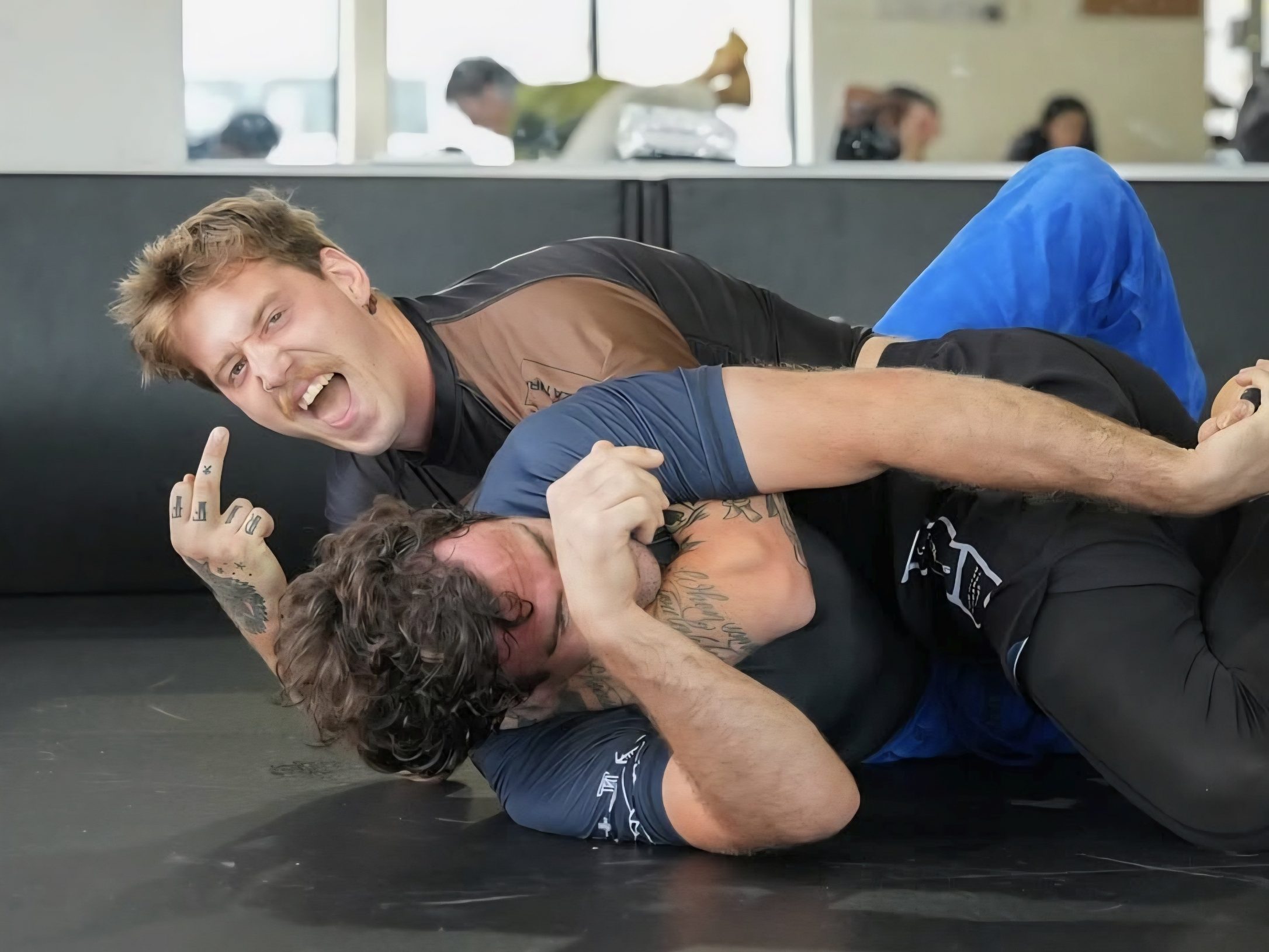
Checkout and Support the cause: Sprezzatura Jiu-Jitsu Apparel
Learn and Train with Sammy at Advantage Jiu-Jitsu
 XERGIUS.COM