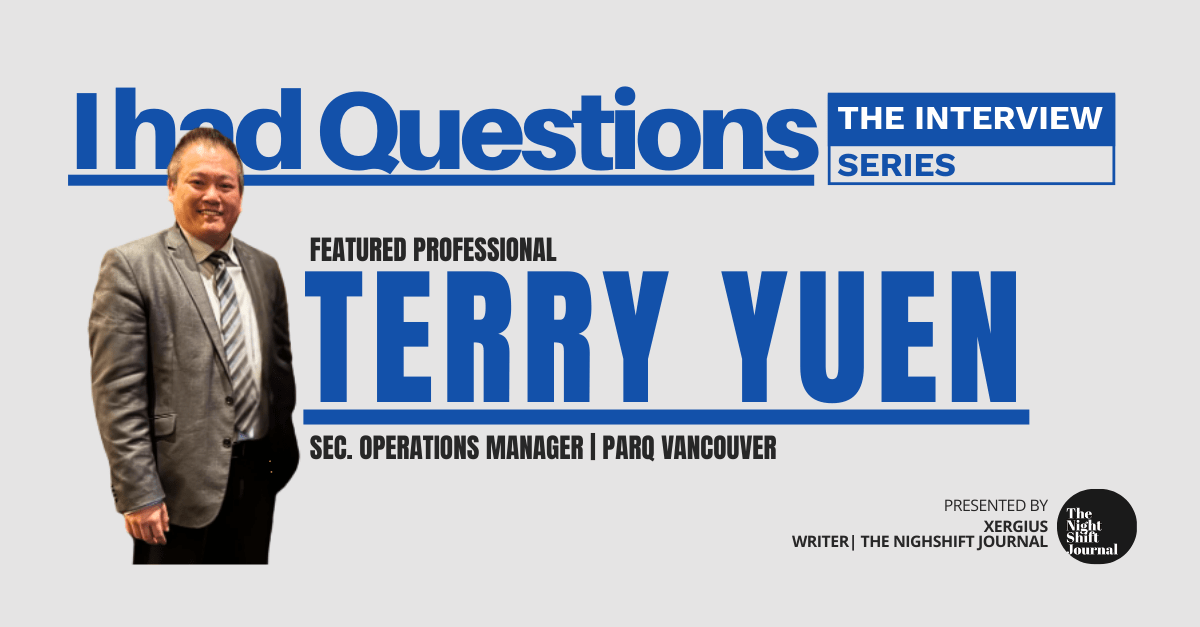
Terry Yuen |Operations Mngr PARQ Vancouver | Leader | Mentor
Terry’s journey begins in an Asian household, where the usual path for every child follows a predictable path. Fortified by culture and social practice. Expectations of becoming a Doctor, Lawyer, Engineer and other occupations that scream success.
Terry during our interview shared that his journey into Security work was never a plan; but rather a path he later forged himself.
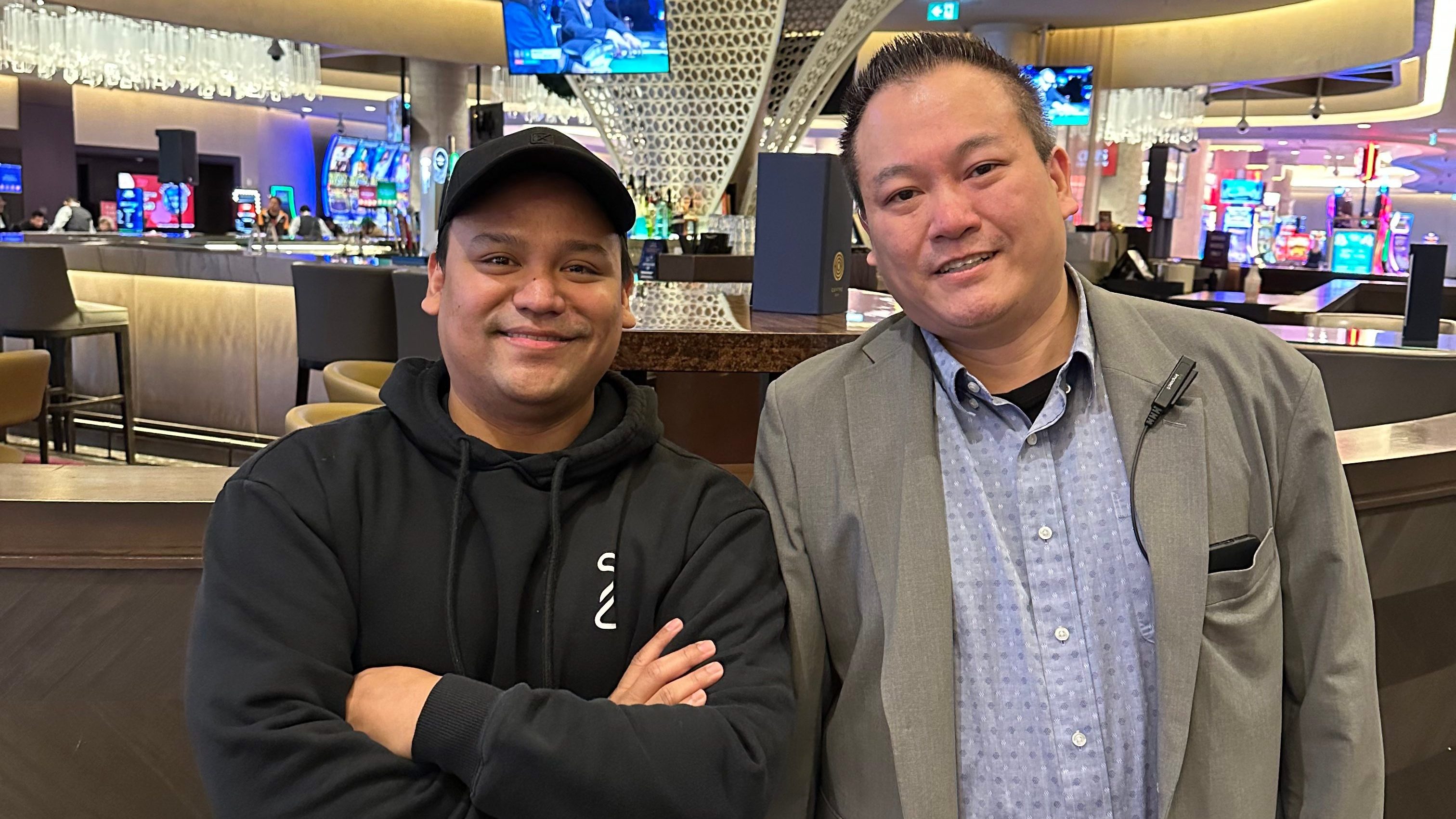
From here on, Terry’s journey comes to light as I ask him questions I prepared to map out the trials and tribulations brought forth by his beginnings and the lessons he learned along the way, most especially in his role as a security professional; to now, the Operations Manager for the biggest Casino Resort in Western Canada.
Let’s begin.
What drew you into security work in the gaming industry, and what kept you?
“It was actually a coincidence. My first security job was at a hockey arena, then I met people who at that time worked at Edgewater Casino, I then applied and got the job. From there, I just kept going.”
“What kept me was the people I worked with. The dynamic nature of the job made it fun and interesting every day. Over time, the opportunities to grow and take on more responsibility appeared before me and kept me here.”
After acquiring the job offer as a security officer, Terry never looked back, instead he moved forward and aimed high. With each step, he positioned himself for greater opportunities, and in time, those opportunities began to unfold. His ambition and persistence to get better guided him always along the way.
Looking back at your first days as a guard, what lessons still stick with you today?
“One of my supervisors told me, ‘Don’t be a hero.’ At first, I didn’t get it, but later I realized he was right. You don’t rush into situations alone; you rely on your team because in turn, they too rely on you. That lesson about teamwork has stayed with me all these years.”
How did you navigate the transition from frontline security to leadership roles?
“I used the experience I gained on the front line and applied it to helping others. When I got promoted, I focused on training new hires and then later mentoring younger guards. My promotion came pretty quick, but it wasn’t overnight; it took about a year and a half to become a relief supervisor from a front-line guard, and three or four years before I had a full‑time supervisory role. Along the way, my superiors put me in situations where I had to act like a supervisor, and that helped me prepare.”
What does effective security work look like to you in a casino environment?
“For me, it’s teamwork. You want everyone to work as one unit, and you need to create an environment where people can enjoy their work while still being professional. In casinos, it’s not just about safety, customer service is just as important because you’re dealing with people constantly.”
What systems or routines have you built to keep your team sharp and cohesive?
“I do a lot of coaching. If someone makes a mistake, I want them to learn from it, so they don’t repeat it. I make sure I conduct myself in an approachable manner, so people can come to me for feedback. I don’t like micromanaging, my style is about coaching and building relationships, not disciplining.”
Which small habit has made the biggest difference in your life or career?
“I try to keep a smile, even on bad days. I don’t want my mood to influence others. If they see me smiling, they feel better too. That’s important to me.”
How do you reset after a stressful shift or incident?
“My philosophy is: what’s done is done, move forward. I don’t take the stress home or bring it back to work the next day. If you keep replaying incidents, you just create more stress. The important thing for me is to constantly learn from mistakes and stressful events, so the next time I encounter it, I will be better prepared.
What is one underrated tool or practice that younger guards should adopt early? “Patience. And learning as much as you can. Those two things will take you far.”
What do you look for when mentoring someone who wants to move into leadership?
“I look for initiative and drive. Do they want to learn? Do they have goals? Aspirations beyond this job? Are they motivated? And of course, they need to be good or at least try to get good at what they do. Some might pick things up quicker than others, but potential can also be found in hard work.”
How do you balance giving guidance while letting people learn through their own mistakes?
“I let them try, even if they fail. Then I’ll ask, ‘Do you know what mistake you made?’ If they do, that’s growth. If not, I’ll coach them. That’s how I learned, and that’s how I teach.”
At some point Terry even went further than just guiding someone through mistakes. He deliberately pushes people so that they can improve.
“I believe in trial and error. Mistakes are powerful teachers. Sometimes I’ll see a mistake coming, but I’ll let it happen because experiencing it makes the lesson stick.
What’s the most important lesson you try to pass on to younger professionals in security?
“Patience and teamwork. Those two have become the foundation of a lot of my success in the industry.
How has your leadership style evolved from Supervisor to Operations Manager?
“It’s not so much that my leadership changed, my perspective did. My style hasn’t changed much; I’ve always tried my best to stay coaching‑focused and be approachable.
“As a supervisor, you’re looking at a group in a team sense, and make sure that all personnel in your team are safe and performing their roles optimally.”
“As an operations manager, you’re looking at the bigger picture. The Department as a whole, and sometimes my scope covers inter-departmental duties. I need to be on page with everyone, so the business operates smoothly, and the facility performs optimally.”
How do you build trust and morale among staff who often face stressful situations?
“By being approachable, giving constructive feedback, and creating an environment where mistakes are learning opportunities. Trust comes from fostering good relationships and honesty.”
What do you hope your team remembers about your leadership style?
“That I was an approachable leader, supportive, and focused on teamwork. I want them to remember me as someone who coached rather than disciplined, and who built trust through honesty and positivity.”
He also added,
“That I was instrumental in helping them reach their goals.”
If you could give one piece of advice to your younger self, what would it be?
I would tell my younger self to try harder in school, learn things, a lot of things, if possible, to discover my interests and inclinations and stick with them. Like I said, the path I forged for myself was never really a plan, but I have no regrets. The decisions I’ve made are what made me who I am today.
As we talked, I had this urge to ask him: What would you have wanted to do if you chose to stick with your interests?
Terry shared that his inclinations were directed towards sports and athletics, although he was aware that he was not blessed with athletic genes, if he could do it all over again, he mentioned that he would have dabbled into Sports analysis, commentary, scouting or sports writing.
Terry’s story is not the traditional one his family or community might have imagined for him. It didn’t follow the prescribed path of doctor, lawyer, or engineer. Instead, it was a path carved out of discipline, and the quiet courage to keep showing up and better himself. What began at a hockey arena became a career defined by patience, mentorship, and the belief in teamwork.
He admits that there might have been some regrets and mistakes along the way, but all of this shaped him into the leader he is today. In the end, Terry’s journey reminds us that success is not always about following the expected path. Sometimes it’s about forging your own, learning and embracing the lessons along the way.
The legacy he is building is here; In the institution he helped build for more than a decade; in the relationships he’s nurtured, the trust he’s earned and the excellence he carries, fortified by his loyalty and competence. PARQ Vancouver has been absolutely blessed with a good leader in Terry YUEN.
 XERGIUS.COM