No one said life was easy. No one said it would be fair. Don’t forget though, that you come from a long, unbroken line of ancestors who survived unimaginable adversity, difficulty, and struggle. It’s their genes and their blood that run through your body right now. Without them, you wouldn’t be here. You’re an heir to an impressive tradition—and as their viable offspring, you’re capable of what they are capable of. You’re meant for this. Bred for it. Just something to keep in mind if things get tough. – Ryan Holiday “the Daily Stoic”
Most upscale restaurants consider a piece of steak, whatever cut may that be, to be their pièce de résistance; no food is simpler yet elegant than a fat piece of steak. However, as easy as it is to prepare steak, one can also fumble as easily. There are not a lot of nuances to hide from, a mediocre tongue will be able to differentiate a poorly executed steak from a good one.
A steak dinner sounds really good, it should be simple right? Preparing whole foods should be straightforward but intricately there are a lot of things going on, a quality piece of steak is good yes but you need salt to taste. Cracked pepper on its own does not really taste good, but added with salt on a piece of steak, it becomes an exquisite experience.
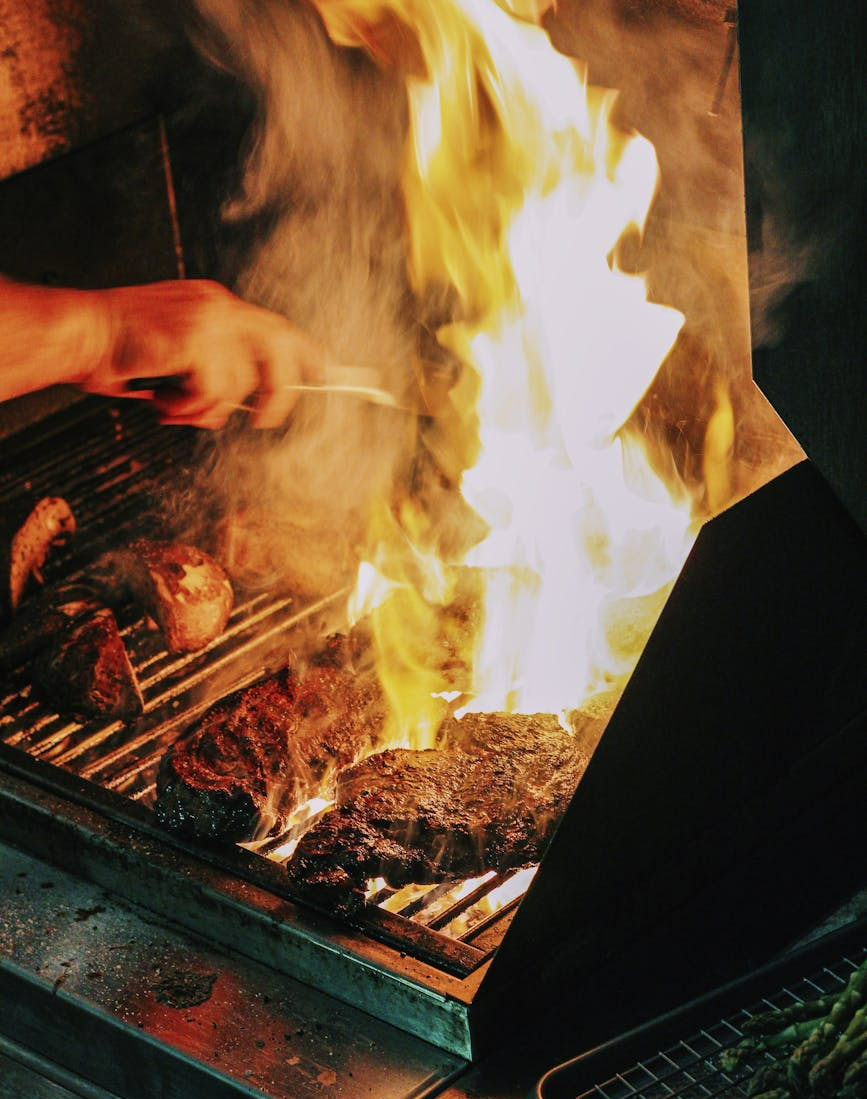
It does not stop there though, salt pepper and steak can be good, hence a tartare, but let’s put the seasoned meat atop a burning charcoal or a sizzling pan and the most pleasant of smells start to waft towards your face, the smell of a raw meat is nothing compared to a perfectly sizzling steak, such as we in life.
The most beautiful things happen quite simply if we have other things going on in our life, some salt to taste and pepper for the depth, now let’s butter it up, wow, even better, but let us not forget the most important step, the cooking process.
As much as I want this not to sound cheesy, us having to go through fire immense heat and pressure makes our life, our dish better. This goes along the lines of “no pressure, no diamonds”, “no pain no gain”. As corny as it is, the people who coined these were up to something.
Knowing this we must learn to embrace challenges that come our way, that the beauty of life can be appreciated when we overcome immense difficulty, that everything in this world is supposed to endure and be resilient no matter what they be or are.
We love the smell of freshly baked bread, we adore the cracks, tears and crevices that provides the bread it’s artisan like allure, however, molecularly the process of baking a piece of dough is as violent as it could be. The intense pressure built up within the dough, is steam exploding out of the surface creating the cracks that we come to appreciate, but such imperfection is deemed to be what makes the bread artisanal. Same as the leoparding of a pizza crust, technically those burnt bubbles are signs that the pizza has been left in the oven a bit longer than how it should be, but because it makes the pizza taste better along with its smoky notes, this imperfection has become a criterion for a good pizza.
Again, such in life. Imperfections are inevitable but also perceived differently, if we can find ways to use our bodies capabilities, we can capitalize on the things that we have and think less of the things we don’t have.
John Danaher known widely as an innovator in modern jiu jitsu pioneering the exploitation of leg lock submissions has changed the game forever. Greg Souders a progenitor of the ecological approach in training and practice not only towards martial arts but most sports and Dima Murovanni the current coach for B-Team (one of the most competitive teams in sport jiu jitsu) is changing the landscape of coaching and instruction via heart rate training.
These individuals have things in common, that they were all plagued with injuries and known to have fragile bodies and because of that, they had to spend less time doing grappling but gained more time studying grappling, if not for their injuries maybe they wouldn’t have even thought of transferring their energy through coaching, but because they chose to capitalize on their free time due to absence on the mats, they were able to learn and dive more into teaching the sport rather than fighting in it.
Milton Erickson, known for Neuro linguistic programming (NLP) and the person who created hypnotherapy, had polio at 19 and it was so bad he couldn’t even move his eye balls, as he sat in bed during paralyzed for 2 years, the only thing he do was to watch and study people and make notes in his brain about the non-verbal cues he witnessed daily, and learning every single thing he could when it came to non-verbal communication. Robert Greene said that he had then learned 20 different forms of YES’s and 100 different forms of NO’s. He mastered all of this because it was the only thing he could do while laying paralyzed in his hospital bed.
When Erickson finally became a psychiatrist following his illness and started to treat people, they thought he was a psychic. He could see things into and through them, and that is because for two years it’s the only thing he could capitalize on.
Then there are imperfections that we incur for ourselves. Muay Thai fighters are known to strengthen their shins through sheer training, they tend to create micro injuries with the aim to toughen the bones and surrounding tissues through repeated impact training. The repetitive stress stimulates the bones to adapt by becoming denser and stronger, it also toughens the soft tissues, muscles, tendons, ligaments around the shin to provide protection. The goal is to build resistance and desensitize the nerves from pain, but in order for this to happen they have to go through intense and painful impact training. There will be bruises, lumps and a lot of pain and such imperfections will only unfold a better stronger shin great for kicking and checking opponents’ attacks.
In the same vein a cauliflower ear is a result on intense grueling training that involves trauma and a lot of grappling. Cauliflower ear itself does not serve any beneficial function; rather, it is a deformity that can impair hearing if the ear canal becomes obstructed or distorted. However, in certain combat sports cultures, a cauliflower ear is sometimes seen as a badge of honor or a sign of experience and toughness, particularly among wrestlers and martial artists.
Ballet dancers incur thick calluses as a result of dancing en pointe, overtime, the friction and pressure leads to the formation of calluses (thickened, toughened areas of skin) on the areas of the toes that bear the most weight and contact with the shoe. These calluses develop as a protective mechanism of the body to reduce discomfort and prevent blisters. Calluses provide some level of protection to the underlying skin and tissues from further damage and irritation caused by the pointe shoes. They also make dancing en pointe more comfortable over time, as the skin becomes tougher and less sensitive to the pressure.
“Be resilient for your sake, be tough and bear pain as you can, because a life of comfort cannot be enjoyed if you have not gone through a life of hardship and suffering, be glad that you are capable, that you are gifted a qualified mind and body to go through life which is only temporary be thankful that you are breathing, moving and that you feel pain and joy and sorrow and happiness, the next day all of this can be taken away.”- Anonymous
 XERGIUS.COM